
Published on July 12, 2024
1. Application Background
Why Accurate Silo Level Measurement Is Critical
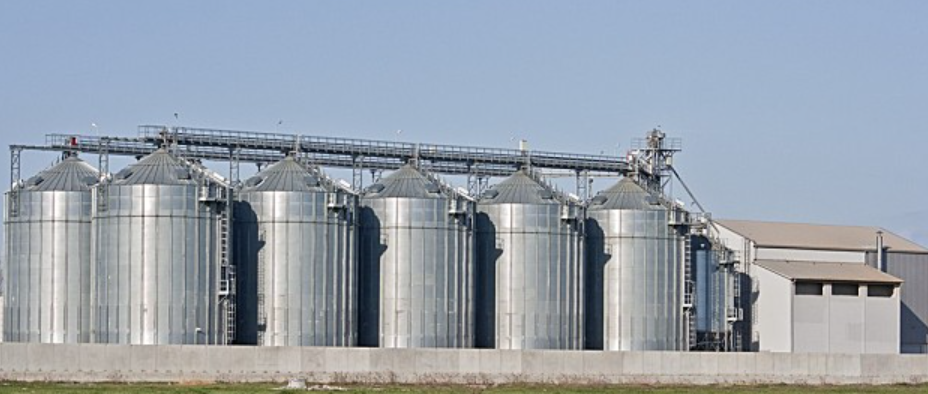
Silos vary significantly in structure and height, typically ranging from 10 m to 30 m, and are widely used to store animal feed, grain, agricultural products, as well as raw materials or finished goods in fisheries, construction, mining, and chemical industries.
Accurate measurement of material level inside a silo is essential for:
- Inventory management
- Continuous material flow
- Production planning
- Equipment safety
Without reliable level data, operators face risks of material shortage, overflow, or unplanned downtime.
2. Risks and Limitations of Traditional Manual Inspection
Traditionally, silo level inspection relied on manual climbing and visual observation from the silo top. Operators often needed to perform inspections multiple times per day.
This approach presents serious drawbacks:
- High safety risk for personnel
- Low inspection efficiency
- Inaccurate estimation based on visual judgment
- Thousands of safety incidents caused by silo climbing
As industrial safety standards continue to rise, manual inspection is no longer acceptable.
3. Overview of Existing Silo Level Measurement Technologies
With the development of level monitoring technologies, silo material level measurement is commonly achieved using:
- Ultrasonic level sensors
- Radar level meters
- Laser distance sensors
Some methods are only suitable for limit alarms (high/low level). Others impose strict installation conditions or are limited by measurement range, resulting in high system cost.
To achieve real-time, accurate, and remote access to silo inventory data, a more flexible and cost-effective solution is required.
4. Laser Distance Measurement Principle in Silo Applications
The working principle of a laser distance sensor is similar to that of ultrasonic sensors.
- The laser emitter projects a laser beam onto the material surface
- The reflected signal is received by the sensor
- The distance is calculated based on the travel time and light speed
- Material height is derived from the measured distance
Laser distance sensors provide fast feedback, high accuracy, and stable performance, making them suitable for complex silo environments.
5. Silo Measurement Challenges and Installation Strategies
Inside silos, structural elements such as beams and walls can cause measurement interference. To avoid false readings, laser sensors typically operate in vertical or small fixed-angle detection modes, meaning each sensor measures a limited number of points.
To improve measurement reliability, different monitoring strategies can be applied:
!https://www.azom.com/images/Article_Images/ImageForArticle_13150(3).jpg
!https://www.monitortech.com/images/Silo Level Continuous.jpg
!https://bulkinside.com/wp-content/uploads/2022/04/3d-silo-m-model.jpg
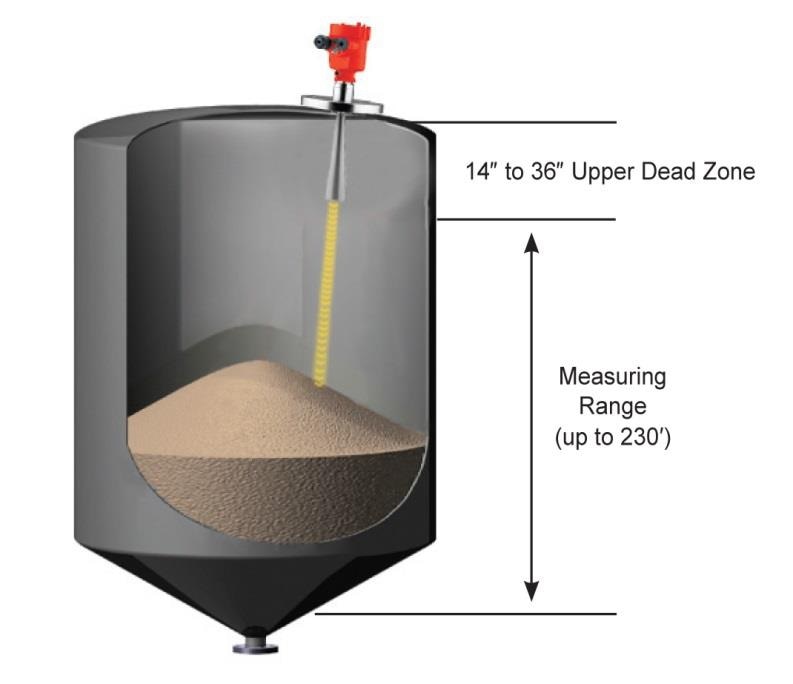
(1) Single-Point Measurement
The sensor is installed at the center of the silo roof, pointing vertically downward to measure the material height at the center of the pile.
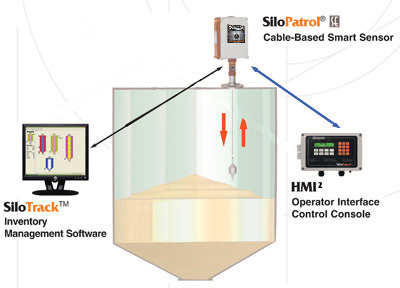
(2) Multi-Point Measurement
Multiple sensors are mounted in parallel using a structural frame. Three-point measurement enables basic surface shape identification (convex or concave).
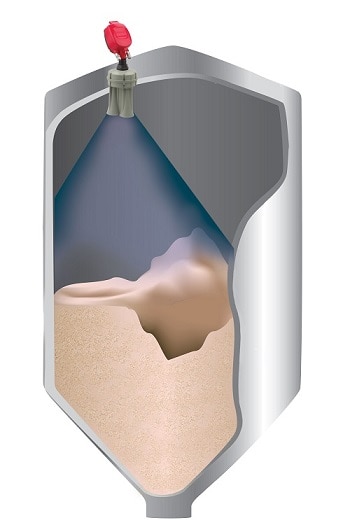
(3) Scanning / Suspended Measurement
The sensor is mounted on a fixture with two degrees of freedom, installed at an inclined position on the silo roof. By scanning the material surface, a material surface model can be generated, allowing more accurate volume calculation.
6. Limitations of Weighing-Based Silo Systems
To monitor material quantity in real time, some silo systems rely on weighing platforms installed beneath the silo.
However, this approach requires:
- Additional load cells
- Complex civil construction
- High installation and maintenance costs
These systems are difficult to upgrade and are not cost-effective for large silo installations.
Real-time and accurate non-contact level measurement is therefore a more practical and scalable solution.
7. Recommended Product for Silo Level Monitoring
L2-80 Laser Distance Sensor Module
MyAntenna RF provides a dedicated laser level monitoring solution for silo applications using the L2-80 laser distance sensor module.
Key Features of L2-80
- Measurement principle: Optical laser ranging
- Laser wavelength: 650 nm visible red laser
- Measurement range: up to 80 m (reflective target recommended)
- Accuracy: ±1 mm (3 m indoor white wall, static test)
- Maximum measurement rate:
- Up to 20 Hz (TTL interface)
- Up to ~10 Hz (RS485 / analog output)
- Non-contact measurement, no material contamination
Important Notes:
- Shortening the measurement range does not improve accuracy
- Data rate depends on interface type: TTL > RS232 > RS485 > 4–20 mA
8. Advantages of Laser-Based Silo Level Monitoring
Using laser distance sensor modules enables:
- Real-time material level monitoring
- Improved inventory accuracy
- Reduced labor and safety risks
- Lower system installation cost
- Easy integration with PLC and industrial control systems
This solution is well suited for grain silos, feed silos, mining silos, chemical storage silos, and bulk material storage facilities.
About MyAntenna RF
MyAntenna Technology Co.,Ltd. specializes in laser distance sensors and antenna solutions.
Our products are widely used in material level monitoring, industrial automation, infrastructure, and agricultural applications, delivering reliable performance in demanding environments.
Related Products
No products selected in this application area